From elementary school PE classes to professional sports organizations, the FitStats product suite delivers research-based fitness assessment tools built for real-world use.
FitStats Education is the complete web-based fitness assessment platform designed specifically for K-12 school districts. From the moment a teacher opens their laptop or tablet on the gymnasium floor, every aspect of the assessment workflow — data entry, instant scoring, report generation, and parent communication — is handled by a single integrated system that requires no software installation and no IT expertise to operate.
The teacher dashboard gives each physical education instructor a real-time view of their class during assessment sessions. As students complete each assessment item, scores are entered and immediately compared against age- and sex-appropriate healthy fitness zones. Students who fall outside healthy zones are automatically flagged for follow-up. At the end of a class period, a teacher can print or email individual student reports the same day — a capability that previously required hours of spreadsheet work.
Assessment protocols supported include the progressive shuttle run for aerobic capacity, one-mile timed run, walk test alternatives for students who cannot perform running assessments, push-up protocols for upper body muscular endurance, curl-up protocols for core endurance, trunk lift for back extension strength, back-saver sit-and-reach for flexibility, and skinfold or BMI body composition measures. Districts select the battery that fits their needs, and the platform accommodates any combination.
The parent portal allows parents to view their child's assessment history, understand what each measure means, and access healthy lifestyle resources without requiring teacher involvement. Secure login credentials and role-based access controls ensure parents can only see their own child's data.
District administrators access aggregate reports showing school-by-school and grade-by-grade fitness trends. These dashboards make it possible to identify schools or grade levels where fitness outcomes are declining and direct professional development or programming resources accordingly. District wellness coordinators can generate board-ready reports that demonstrate program effectiveness with clear data visualizations.
FitStats Education is aligned with national health-related fitness standards and healthy fitness zone references developed from large-scale research on the relationship between fitness measures and health outcomes in children and adolescents. The platform is updated as the scientific literature evolves.
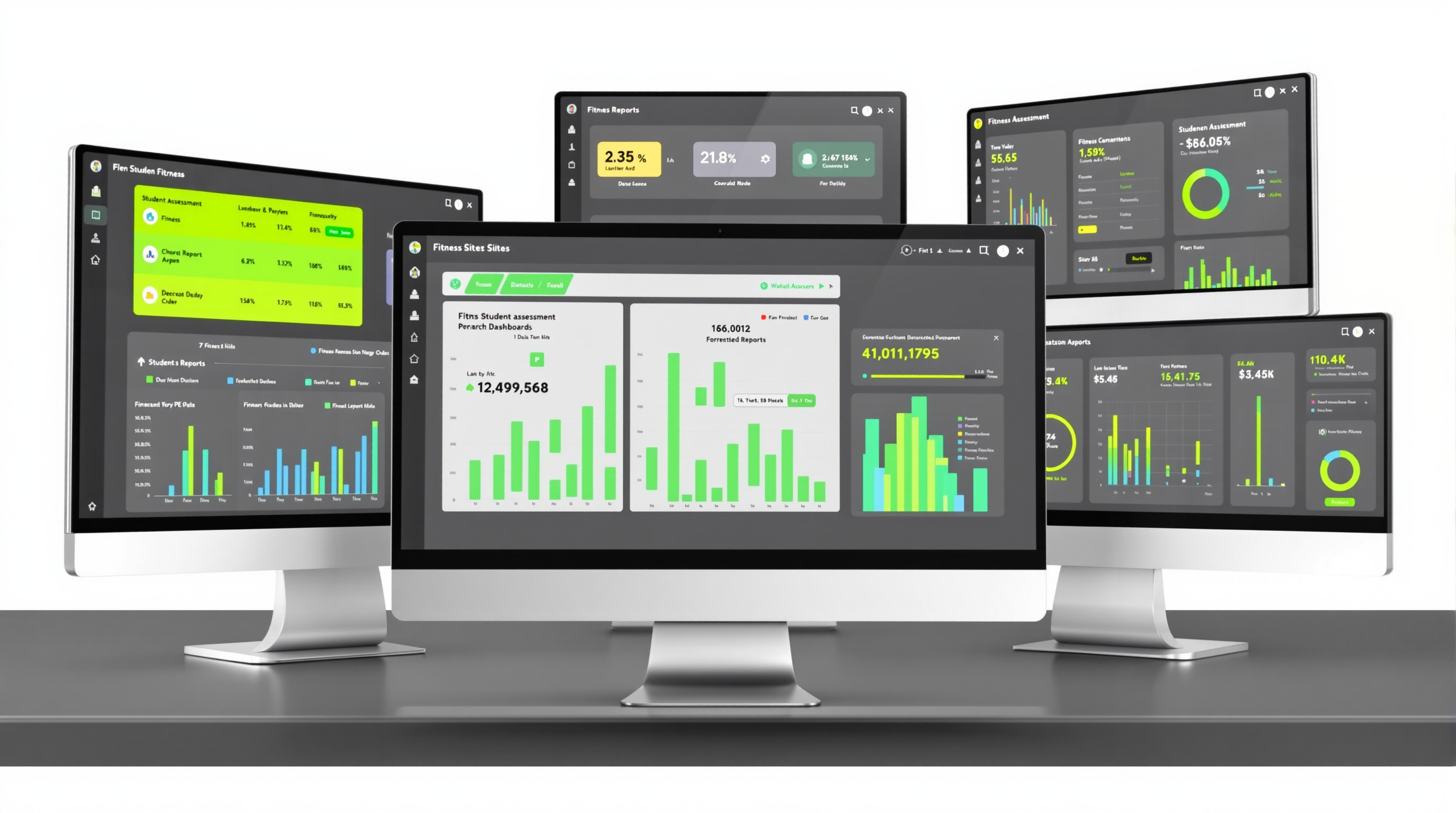
FitStats Performance extends the proven data architecture of FitStats Education into the sports organization environment, where the focus shifts from population-level wellness screening to individual athlete development and team-level performance monitoring.
Coaches and athletic trainers use FitStats Performance to design custom assessment batteries relevant to their sport and competitive level. Pre-season fitness testing establishes individual athlete baselines. In-season assessment data is tracked against those baselines so coaches can see — objectively — whether athletes are improving, maintaining, or declining in key fitness components over the course of a season.
Team-level reporting compares individual athlete scores against team averages and sport-specific benchmarks, helping coaches identify athletes who may benefit most from targeted conditioning work. Return-to-play protocols can be built into the platform, requiring athletes to meet defined fitness thresholds before being cleared for full training or competition following injury or illness.
FitStats Performance reports are designed for communication between coaches, athletic trainers, and team management. Exportable PDFs and data files make it easy to share assessment summaries with team doctors, physical therapists, and strength and conditioning staff who work across organizational silos.
AthleteMonitoring.com is the elite sports arm of the FitStats ecosystem, designed for professional and high-performance sports organizations where athlete monitoring is a daily operational priority rather than a periodic assessment event.
The platform captures subjective wellness data — sleep quality, fatigue, mood, muscle soreness — through quick daily check-ins that athletes complete on their phones before training. It integrates with GPS and heart rate monitoring systems to capture objective training load data. Fitness assessment results from testing sessions feed into the same athlete profile, creating a longitudinal record that combines objective performance measures with day-to-day readiness signals.
Coaches and performance staff start each training session with a readiness dashboard that summarizes which athletes are showing elevated fatigue signals, which are approaching overload thresholds, and which are performing in their optimal training zone. These signals help coaches make informed decisions about individual training modifications before problems become injuries.
AthleteMonitoring.com has earned a reputation in high-performance sports environments for combining analytical depth with genuine day-to-day usability. Used by professional sports organizations including Sydney FC, the platform is trusted by coaches and performance directors who need reliable data without complexity that gets in the way of their real work.
FitStats Wellness adapts the research-based fitness assessment capabilities of the FitStats platform to the corporate wellness environment. Human resources and wellness coordinators use FitStats Wellness to design, administer, and report on employee health and fitness initiatives without requiring a large team of fitness staff.
The web-based format allows employees across multiple office locations to complete voluntary fitness assessments with minimal supervision. Individual results are private and secure, visible only to the employee and program administrators in aggregate-only views that protect personal health information.
FitStats Wellness supports group fitness challenges, goal-setting features, and progress tracking tools that help employees stay engaged with wellness programs over time. Quarterly and annual reporting provides the aggregate data that program coordinators need to demonstrate effectiveness, justify continued investment, and identify areas for program improvement.